Realizing Resilience Podcast
Realizing Resilience is a podcast about building strength across every layer of life: physical, psychological, financial, and ecological. The show is hosted by Nate Fournier, founder of Reimagined Roots - an ecological landscape design/build company transforming grass lawns into abundant ecosystems full of food, medicine, and native plants. Each episode explores practical ways to move beyond fragile systems and build ones that last. Grounded, actionable, and based on real experience. Sponsored by Reimagined Roots.
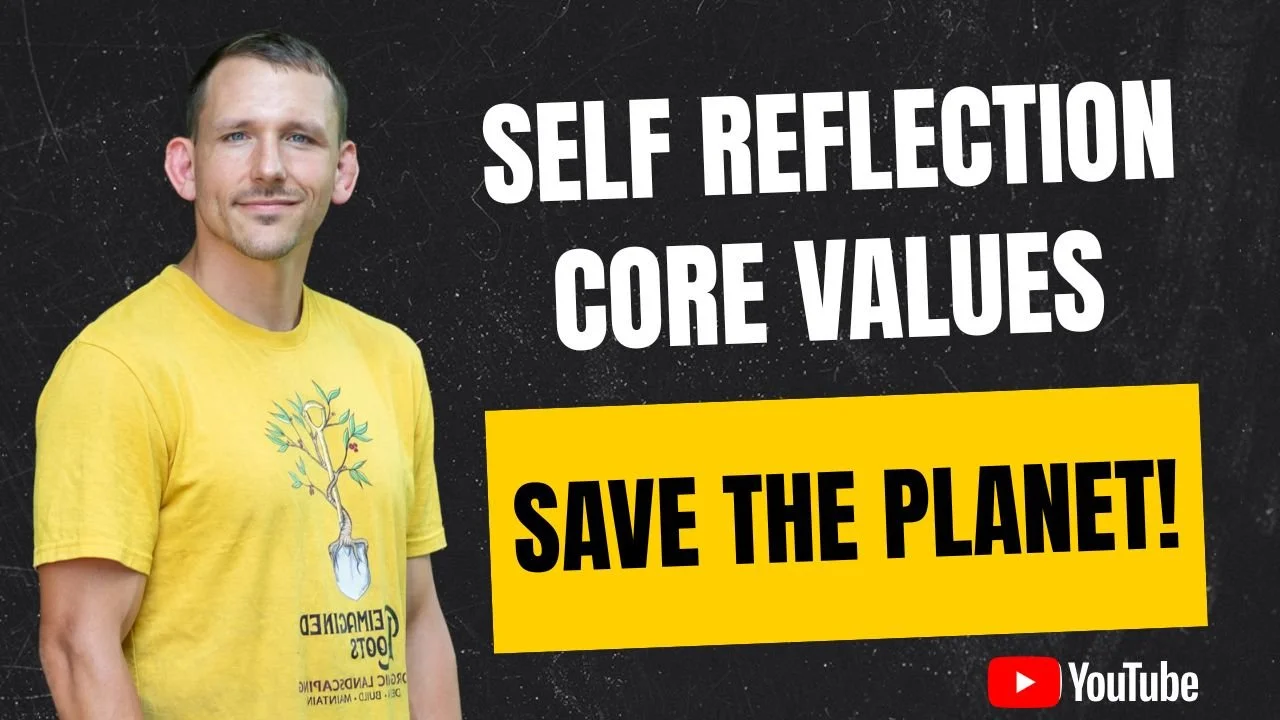
Episode 4: The Surprising Truth About Self-Reflection, Core Values, and Their Role in Saving the Planet
This episode explores the deeper philosophy behind resilience, permaculture, and ecological stewardship. Nate shares the core values shaping Reimagined Roots, including resilience, conscious curiosity, radical candor, and purposeful living, while reflecting on food systems, regeneration, gardening, and humanity’s relationship with nature. A grounded conversation on building stronger people, communities, and landscapes in Central Massachusetts and beyond.
-
Welcome to the Realizing Resilience podcast. I’m your host, Nate Fournier, and as always, this podcast is brought to you by Reimagined Roots, an edible and ecological landscaping company transforming backyards into living ecosystems filled with food, medicine, and native plants.
Originally, this podcast was going to focus mostly on gardening tips, techniques, and practical landscape advice. And while we’ll absolutely continue talking about gardening, permaculture, and ecological land stewardship—especially here in Central Massachusetts—I realized my passion is broader than gardening alone.
Gardening is a tool. An incredibly important one.
But the deeper goal is resilience.
Not just resilient landscapes, but resilient people, families, and communities.
That’s really what this podcast is about.
Why Resilience Matters
When I reflect on why I do this work, it comes back to a few core values that shape both my life and Reimagined Roots as a company.
The first is resilience.
There’s a difference between security and resilience. Security is stability. Resilience is the ability to adapt, recover, and become stronger through challenge.
Nature demonstrates this constantly.
A forest disturbed by fire regenerates. Muscles strengthen through stress. Ecosystems evolve through pressure and adaptation.
Even psychologically, many of our greatest periods of growth come through struggle.
That idea—that systems can grow stronger through adversity—is deeply important to me.
And I believe we need more of it in our personal lives, our communities, and our relationship with the natural world.
Conscious Curiosity
The second core value is conscious curiosity.
I originally described this as lifelong learning, but it’s deeper than that.
It’s about looking at the world with awe and admitting how much we still don’t understand.
Nature is humbling. The more I learn about ecology, biology, soil systems, and the interconnectedness of life, the more I realize how much remains unknown.
But curiosity alone isn’t enough.
The “conscious” part matters too.
If I don’t understand something, I try to learn. I research it. I observe. I ask questions.
That mindset drives almost everything I do.
Radical Candor
The third core value is radical candor.
To me, that means being honest and direct, even when conversations are difficult.
We cannot solve problems we refuse to talk about.
And one of the most important conversations we need to have is about our food system:
Where our food comes from
How industrial agriculture impacts ecosystems
The influence of corporations and global supply chains
The long-term effects on human and ecological health
Modern agriculture has transformed the face of the planet in an incredibly short period of time.
That reality can feel overwhelming.
But I also believe we have the ability to reverse much of the damage we’ve done if we choose to act intentionally.
And I’m not waiting for governments or institutions to solve it for us.
I think one of the most powerful things we can do starts right in our own backyards:
Growing food
Planting native species
Restoring ecosystems
Rebuilding soil health
And the beautiful part is these spaces can also be incredibly inspiring and alive.
To walk through a thriving landscape buzzing with pollinators, food, aromas, textures, and biodiversity is a powerful experience.
That kind of beauty creates hope.
Moving With Purpose
The fourth core value is zest.
To me, zest means moving through life with purpose and urgency.
There’s a tendency in ecological spaces to romanticize nature without fully acknowledging the scale of the challenges we face.
But the reality is that we are living through massive ecological, technological, and societal shifts.
Artificial intelligence, climate instability, political uncertainty, economic fragility—these systems are changing rapidly.
And I believe we need to actively participate in shaping what comes next.
Not through fear.
Through regeneration.
I think conservation alone is no longer enough.
We need regeneration.
That means understanding natural systems deeply and then working with them intentionally to accelerate healing, biodiversity, and resilience.
I believe stewardship is one of humanity’s highest responsibilities.
Not domination over nature.
Stewardship of it.
The Philosophy of Arete
A concept that deeply resonates with me is the Greek philosophy of Arete.
At its core, Arete is about striving toward excellence and becoming the fullest expression of yourself.
Not perfection.
Optimization.
It asks:
What is your highest potential?
What can you contribute to the world?
How do you live with virtue, integrity, and purpose?
And I think that same philosophy applies collectively.
What would happen if we all worked to become the best versions of ourselves while simultaneously improving our communities and restoring our relationship with the planet?
That possibility gives me hope.
Final Thoughts
At the end of the day, all of this starts with self-reflection.
Understanding your values.
Understanding what kind of life you want to build.
Understanding how you want to contribute.
I think many people today feel disconnected—from nature, from meaning, from community, and even from themselves.
But I believe we are entering a major cultural shift.
A movement toward working with nature instead of against it.
A movement toward resilience, stewardship, and deeper connection.
And it can all begin in something as simple as a garden.
So whether you’re here for the philosophy, the gardening techniques, or the bigger ecological conversation, I’m glad you’re here.
We’re going to grow ourselves, our communities, and our gardens together.